
Secure code review vs. penetration testing: which do you need?
Choose an assessment based on the question you need answered, the access you can provide, and the evidence your team needs to act.
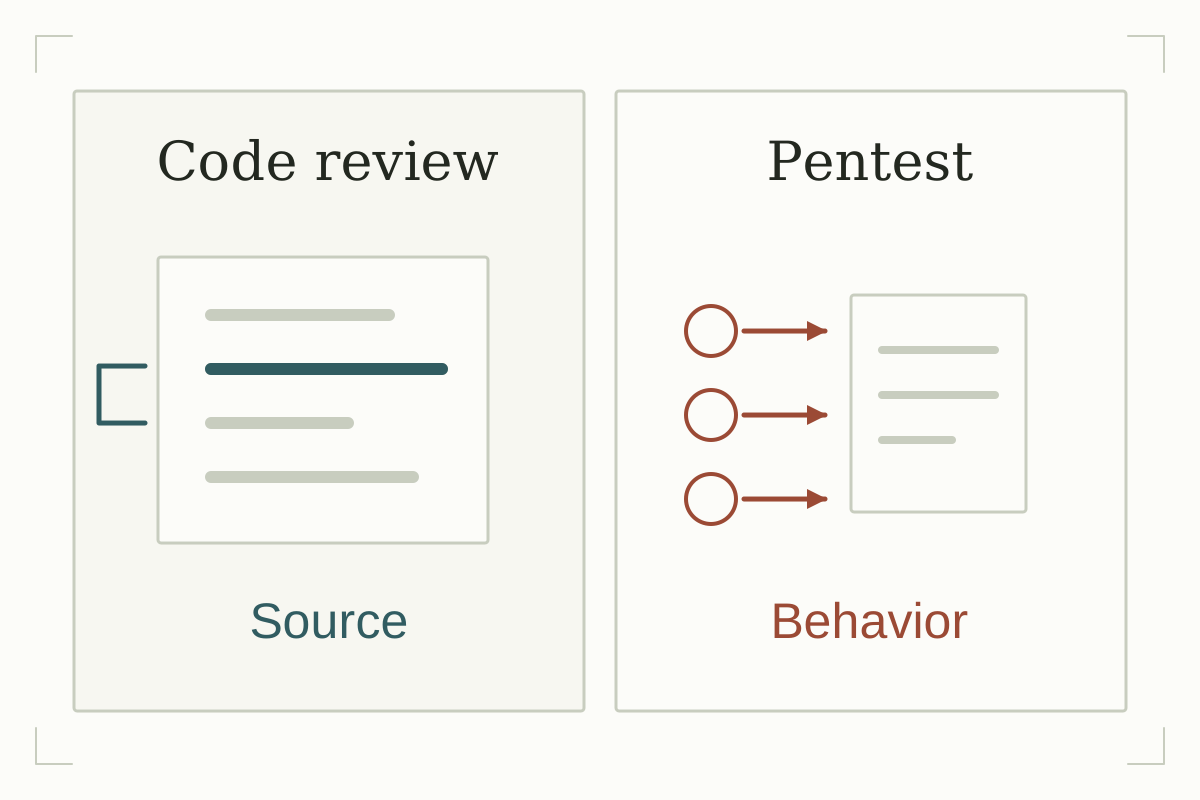
Choose a secure code review when you need to understand how a sensitive behavior is implemented. Choose a penetration test when you need to assess how a running application behaves under attempted abuse. Use both when the decision depends on implementation details and the way those details interact with deployed services. The labels alone do not define the coverage; the engagement scope does.
For example, a team replacing its authorization middleware may need a reviewer to trace policy enforcement through every caller. A team preparing for an enterprise customer's security review may need an assessment of the deployed application with reproducible findings. A new integration that bridges tenants or cloud services can require both views.
What each assessment can show
| Question | Secure code review | Penetration test |
|---|---|---|
| Primary view | Implementation, data flow, dependencies, and security decisions. | Reachable application behavior and attack paths within the agreed environment. |
| Useful access | Source, build context, architecture, and engineers who know intended behavior. | Running systems, representative accounts, test data, and operating permission. |
| Typical evidence | Affected code paths and the conditions under which a weakness can occur. | Requests, responses, actions, and demonstrated effects. |
| Coverage limits | Unreviewed code and assumptions about runtime configuration. | Untested paths, access constraints, environment differences, and available time. |
These approaches can overlap. A penetration tester with source access can use the code to develop and validate hypotheses. A code reviewer can run a local test to verify a concern. OWASP's Web Security Testing Guide places multiple testing techniques within a broader testing program, which is a useful reason to ask about the actual work rather than relying on an assessment label.Source: OWASP Web Security Testing Guide
Work backward from the engineering decision
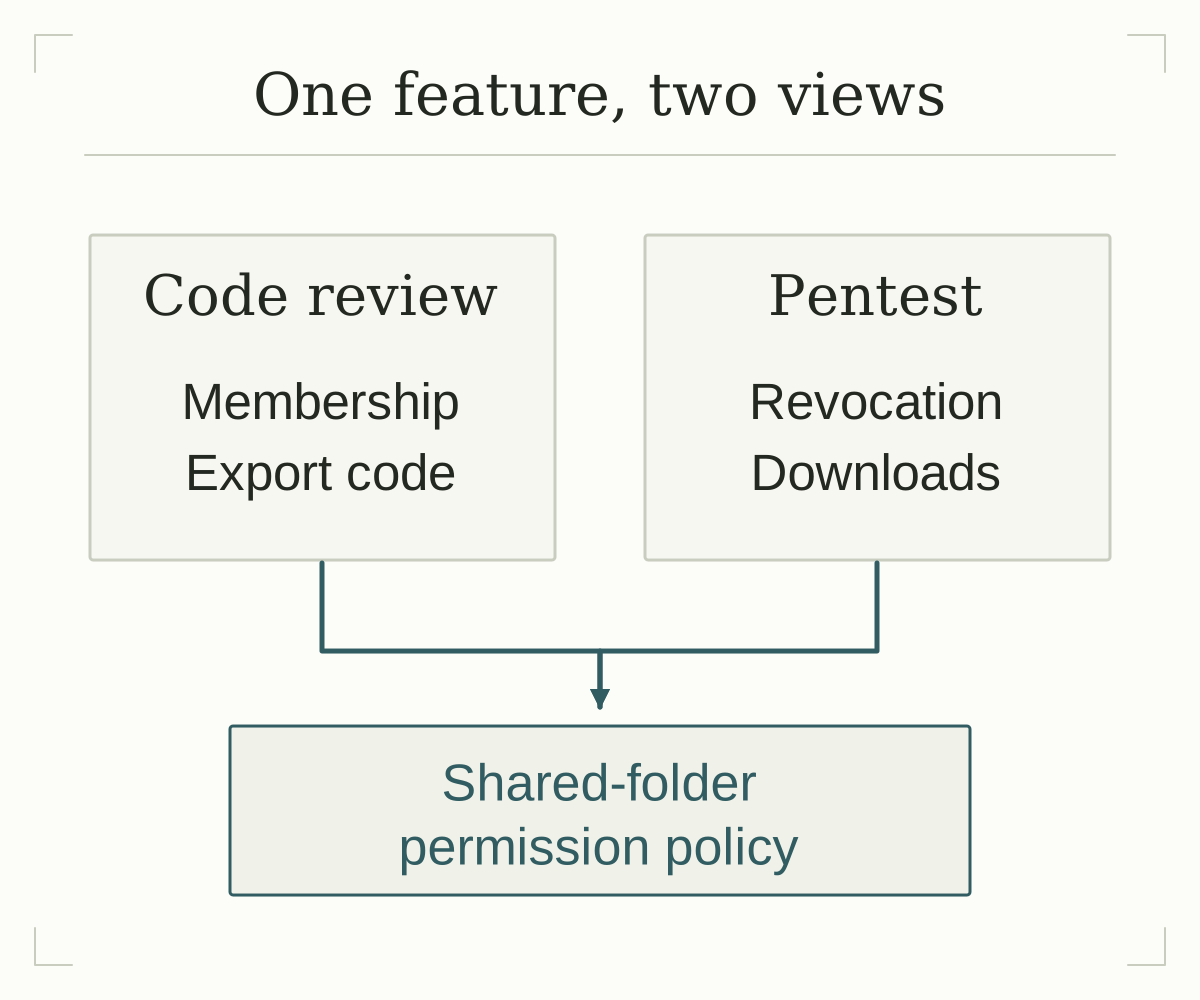
Suppose your application is adding shared project folders. A code review could follow the membership check from the API handler to the storage query and identify a background export path that omits it. A penetration test could exercise sharing, revocation, and downloading through the application, revealing whether the deployed cache or export worker preserves access after a permission change. Either finding should be tied to the intended product behavior.
Before requesting proposals, write the question you need answered. Useful examples are whether the new authorization layer covers all data access, whether a restricted user can perform an administrative action, or whether a partner integration can cross a tenant boundary. A question that names the asset and authority is easier to scope than a request to check the application for security.
Choose an appropriate depth
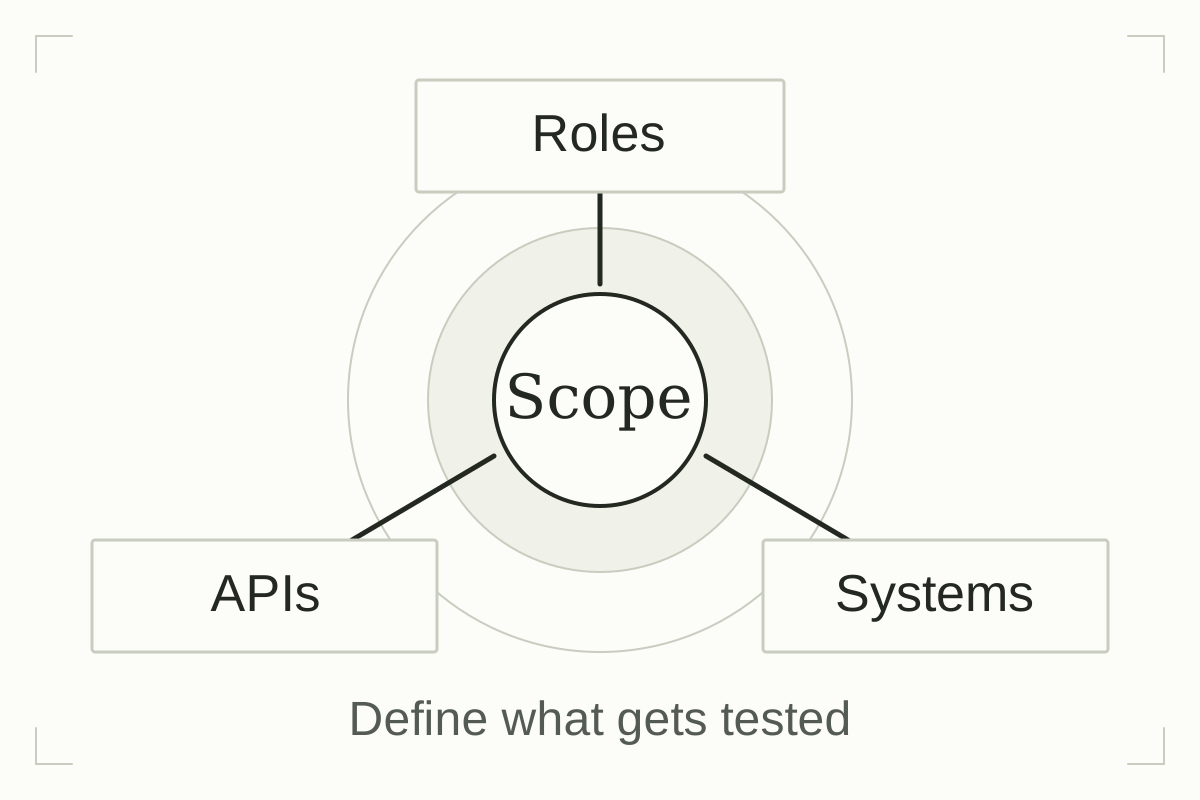
A focused review can examine a small number of security-critical flows in detail. A broader assessment can cover more of the application with less time on each path. Ask the provider to explain its priorities and exclusions. For large codebases, state which repositories, services, and versions are included. For a deployed test, state which identities and environments the tester will have.
OWASP ASVS supplies a catalog of application security requirements that can help specify verification work. If you use it in a scope, name the version and selected requirements, and agree how each will be evaluated. A reference to the standard is useful only when the report makes the covered requirements and evidence visible.Source: OWASP Application Security Verification Standard
Plan for the people who must fix the findings
Ask for findings that identify the affected behavior, supporting evidence, relevant code or configuration, and practical remediation guidance. A report should distinguish a confirmed path from a concern that requires further investigation. Agree how the provider will handle questions after delivery and whether retesting is included.
If two teams perform code review and penetration testing, arrange a handoff. Share confirmed findings and known constraints so the later work can investigate remaining uncertainty. Preserve the ability to test independently; a reviewer should not assume that another team's clean result covers a different version, role, or environment.
A useful brief for either engagement
- The change or business decision that prompted the assessment.
- The applications, repositories, identities, and workflows in scope.
- The security requirements and any existing findings.
- The access and environment available for verification.
- The evidence, deadline, remediation support, and retest you need.
Use that brief to select an assessment that resolves the uncertainty your team faces. If the main question spans both implementation and runtime behavior, ask for a combined scope with clear responsibility for each part and one coherent remediation handoff.
Sources
- OWASP Web Security Testing Guide wstg.owasp.org
- OWASP Application Security Verification Standard asvs.owasp.org
Tell us what changed in your application and what decision the assessment needs to support. We can recommend a code review, a penetration test, or a focused combination.
Explore application securityContinue reading
How much does a SaaS penetration test cost?
Build a useful budget from scope, tester time, reporting, and retesting. Includes a worked example and a checklist for comparing quotes.
Read the guide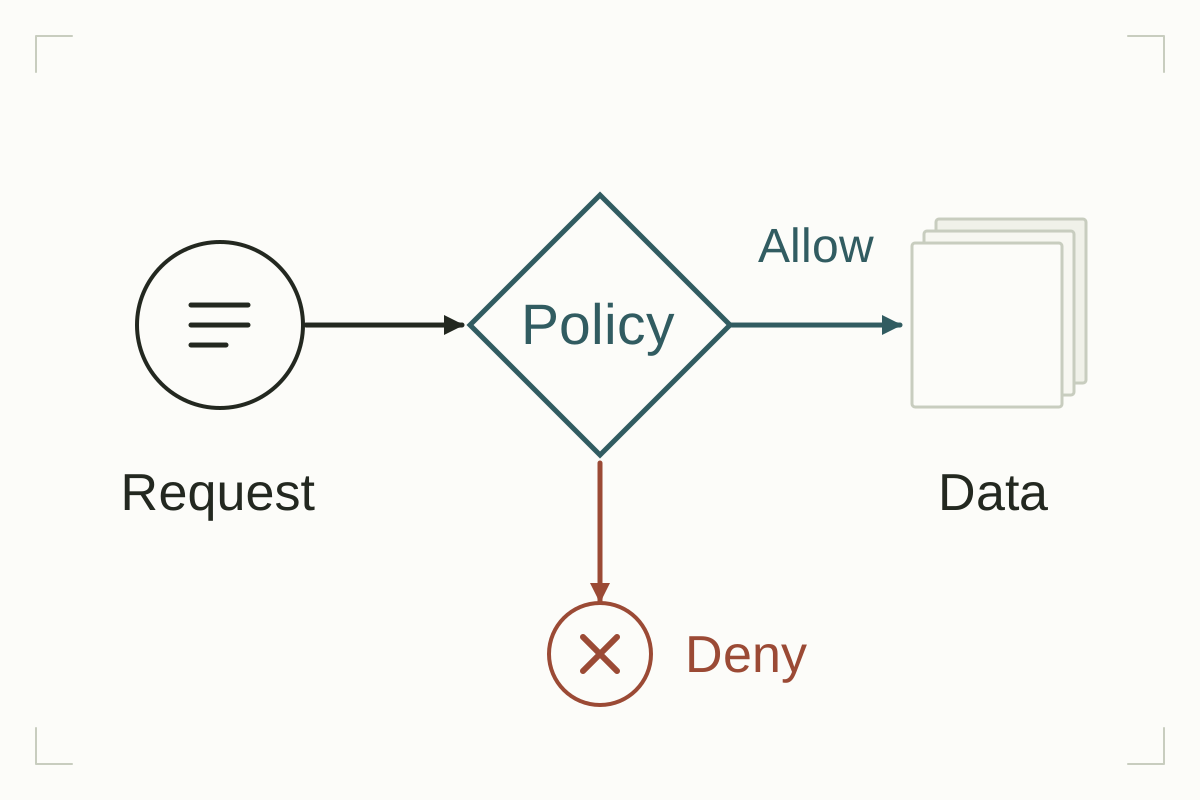
Security review for AI-generated code: what to check before shipping
A review sequence for authentication, authorization, data handling, dependencies, and deployment changes in code written with AI assistants.
Read the guide