
The cost of shift-left security: tooling, triage, and developer time
Budget for the work a security check creates, including triage, remediation, and upkeep. Use an explicit cost model before claiming that moving a check earlier saves money.
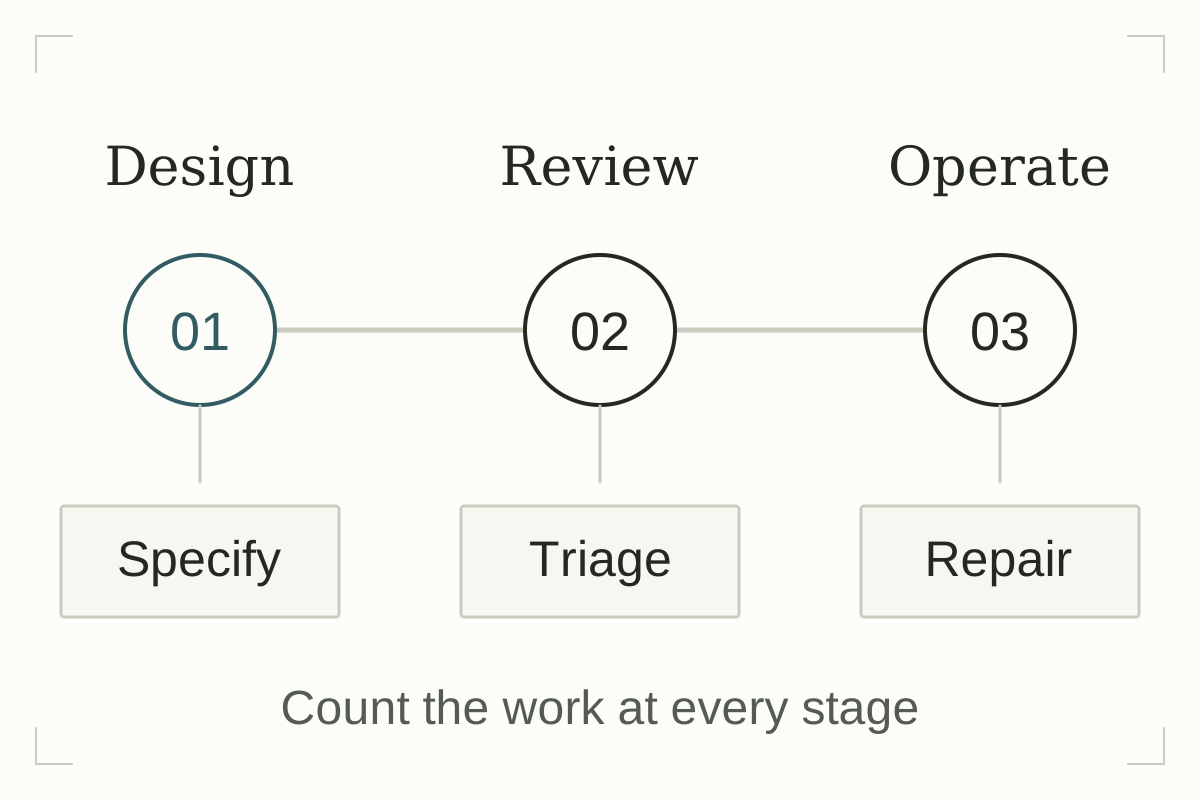
Budget for setup, recurring triage, remediation, and maintenance when moving security checks earlier in development. Tool licenses are one line in that budget. Engineers also review findings, change code, maintain rules, and resolve exceptions. Measure those activities before comparing the program with your current process.
NIST's Secure Software Development Framework recommends integrating security practices into the development lifecycle and addressing vulnerability root causes. Use those practices to organize the security work, then estimate its cost from your own process. The economics depend on your application, the check, the finding, and the work needed to resolve it.Source: NIST Secure Software Development Framework 1.1
Separate adoption from monthly operations
Adoption includes connecting repositories, configuring access, establishing a baseline, deciding which results block a change, assigning owners, and teaching people how to handle exceptions. Record these hours separately from recurring work. A tool that appears cheap after setup can still require a substantial initial commitment from the engineers needed to deliver the product.
Monthly operations include tool fees, incremental CI usage, triage, remediation, rule maintenance, and support for engineers encountering the check. Keep active work distinct from elapsed pipeline time. A ten-minute scan does not automatically consume ten minutes of every developer's labor if they can continue useful work while it runs.
A worksheet with visible assumptions
The following is a hypothetical four-week planning period, not market pricing or a Counterweight quote. It assumes a loaded engineering cost of $100 per hour, 24 alerts per week requiring ten minutes of triage each, and eight accepted findings per period requiring 90 minutes of remediation each. Replace every input with your own measurements or estimates.
| Component | Assumption | Cost |
|---|---|---|
| Licenses | $600 per period | $600 |
| Triage | 24 alerts × 4 weeks × 10 minutes = 16 hours | $1,600 |
| Remediation | 8 accepted findings × 1.5 hours = 12 hours | $1,200 |
| Rule and workflow maintenance | 4 hours | $400 |
| Incremental CI usage | $50 per period | $50 |
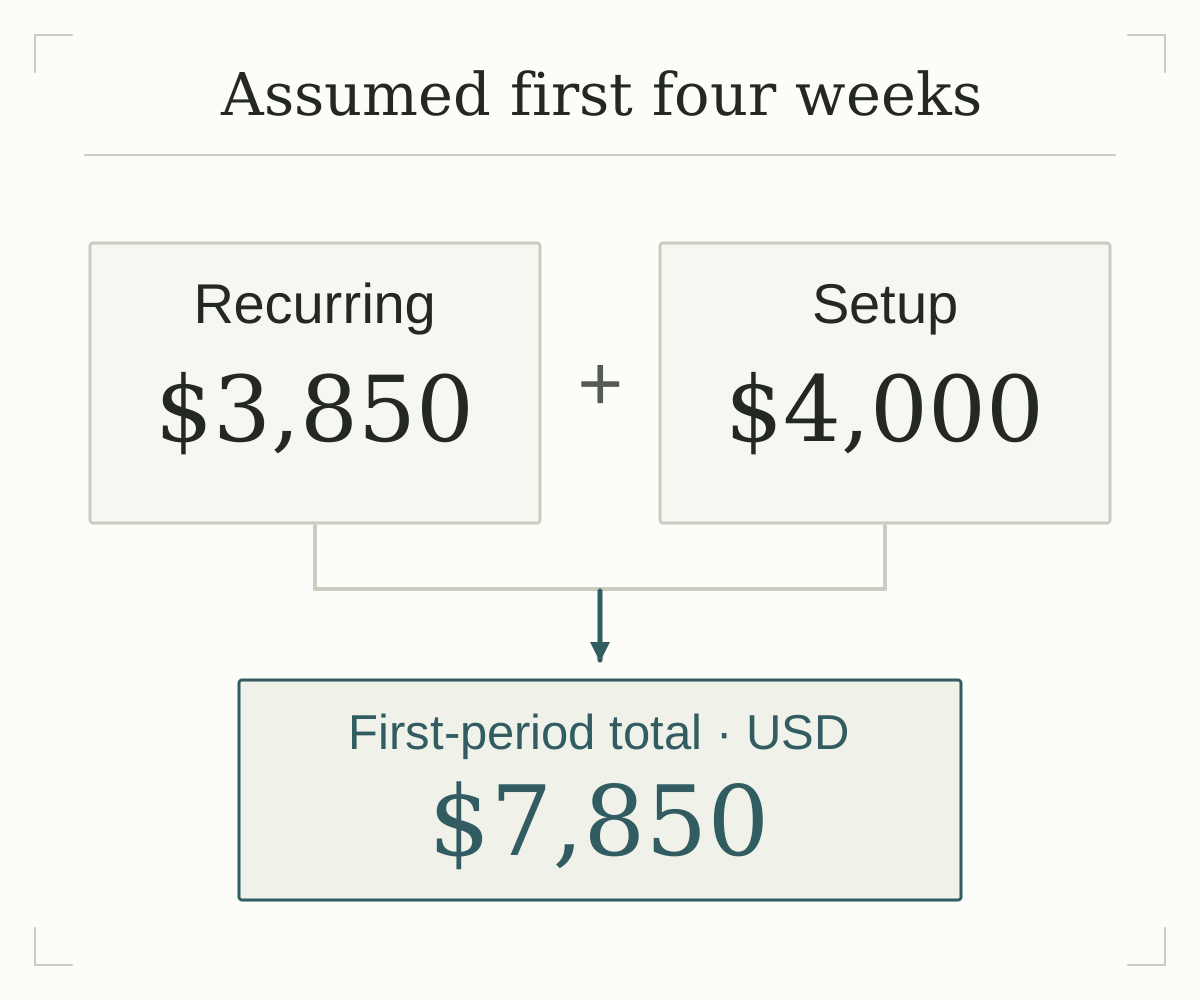
| Recurring total | 32 labor hours plus fees | $3,850 |
| One-time setup | 40 hours at $100 per hour | $4,000 |
Under those assumptions, the first period costs $7,850 and later comparable periods cost $3,850. These totals do not include an estimate of avoided incidents, displaced existing tools, or previously budgeted remediation. If a row replaces work your team already performs, count the change in cost when assessing the new program. Counting the full row as both an existing expense and a new expense would overstate the increase.
Find the expensive handoffs
Ask where a result waits for a person to make a decision. An alert with no owner may circulate through several teams before anyone determines that it is irrelevant. A validated finding without reproduction steps may force the application team to repeat the investigation. Those handoffs belong in the operating model even when the scanner has already finished.
Start a pilot with a small set of repositories and checks. Record the alert, its owner, the decision, active triage time, and remediation effort. Preserve the reasons for dismissals and exceptions. A finding can be accurate yet outside the application's reachable attack surface; a technically valid result can also expose a real gap that the current team has no capacity to fix.
Compare outcomes over a defined scope
Track what reaches production as well as what the pipeline reports. Useful measures include confirmed issues found after release, repeated instances of a previously addressed root cause, time to close an exposed issue, and the fraction of checks that require manual intervention. Report the applications, release period, severity approach, and assessment coverage alongside the numbers.
A falling finding count is ambiguous when testing coverage falls too. An increased count can reflect improved coverage. Keep an assessment method stable long enough to interpret changes, and annotate changes to scanners or testing scope. Avoid turning a convenient count into a claim that the application has become proportionally safer.
Choose the next check deliberately
- Choose a defect class or design decision the check can address and name the affected applications.
- Estimate setup work and recurring triage before making the check a release blocker.
- Give engineers a clear owner, explanation, and remediation path for each blocking result.
- Review exceptions on a schedule and retire checks whose cost exceeds their demonstrated value.
For a team repeatedly missing tenant checks, a review of the shared data-access pattern may be a better first project than another broad scan. For a team committing credentials, a targeted prevention and response workflow may be more useful. Make the next investment answer a specific failure your engineering team can recognize and verify.
Sources
- NIST Secure Software Development Framework 1.1 csrc.nist.gov
Bring your current checks, finding backlog, and engineering constraints. We can help choose security work that fits your delivery process and measure its operating cost.
Explore application securityContinue reading
How to reduce recurring vulnerabilities in a SaaS codebase
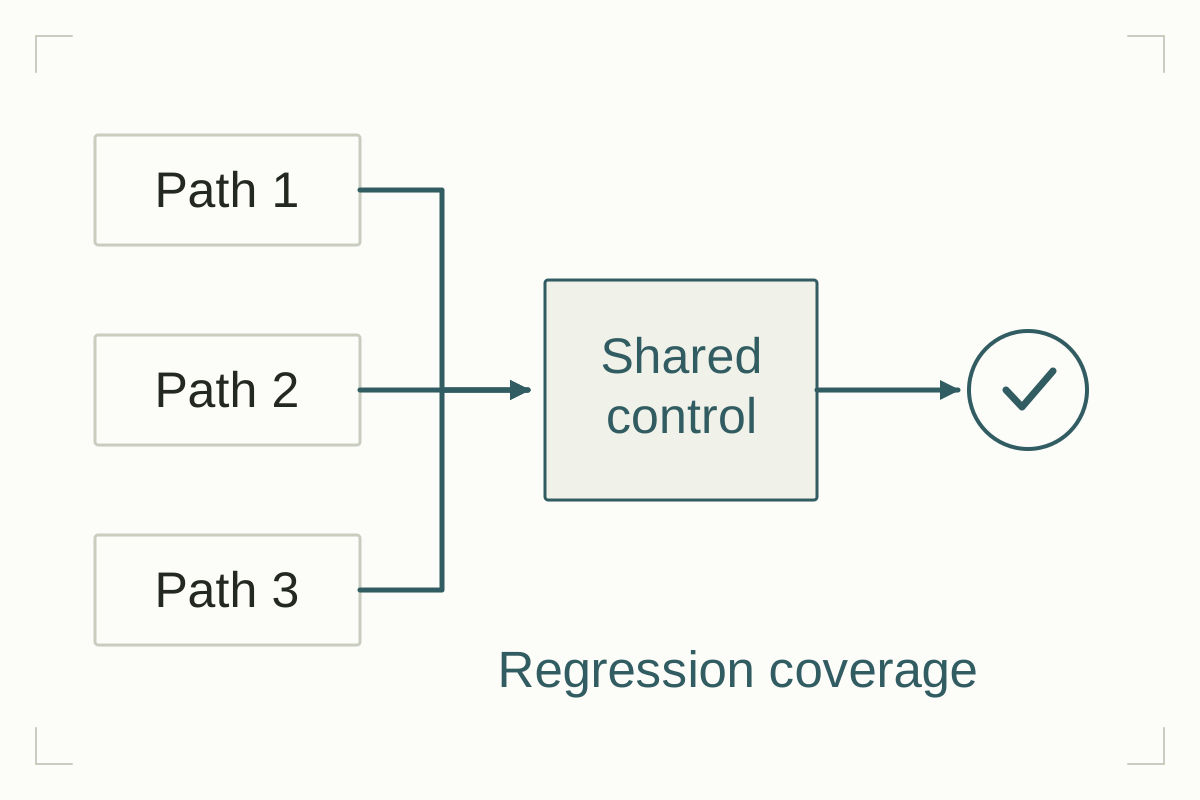
Use repeated findings to identify shared design problems. Move from isolated patches to maintained controls, regression coverage, and a measure of recurrence.
Read the guide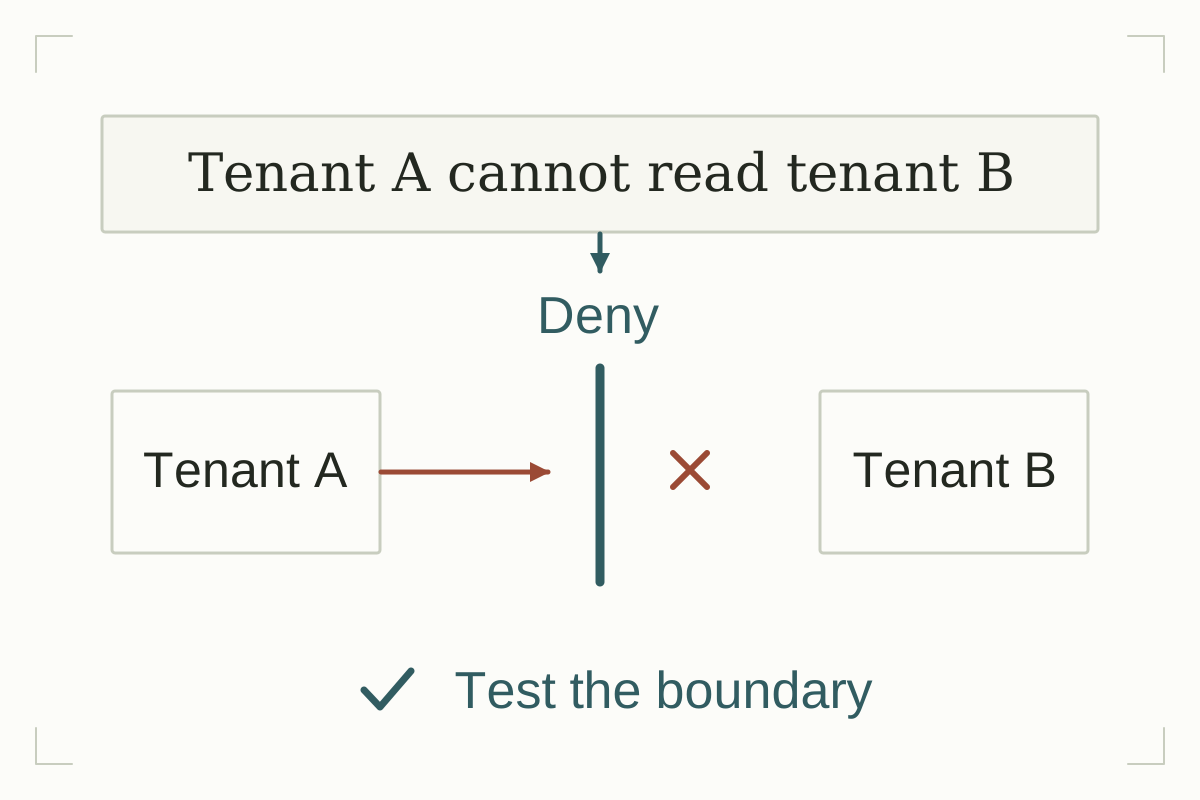
Security requirements for spec-driven development
Turn security requirements into enforceable behavior and negative tests before an AI coding agent starts implementation. A tenant-isolation example shows the full chain.
Read the guide