
AI agent production readiness: a rollout checklist
Review evaluation evidence, permissions, approvals, failure handling, monitoring, and ownership before giving an AI agent real work.
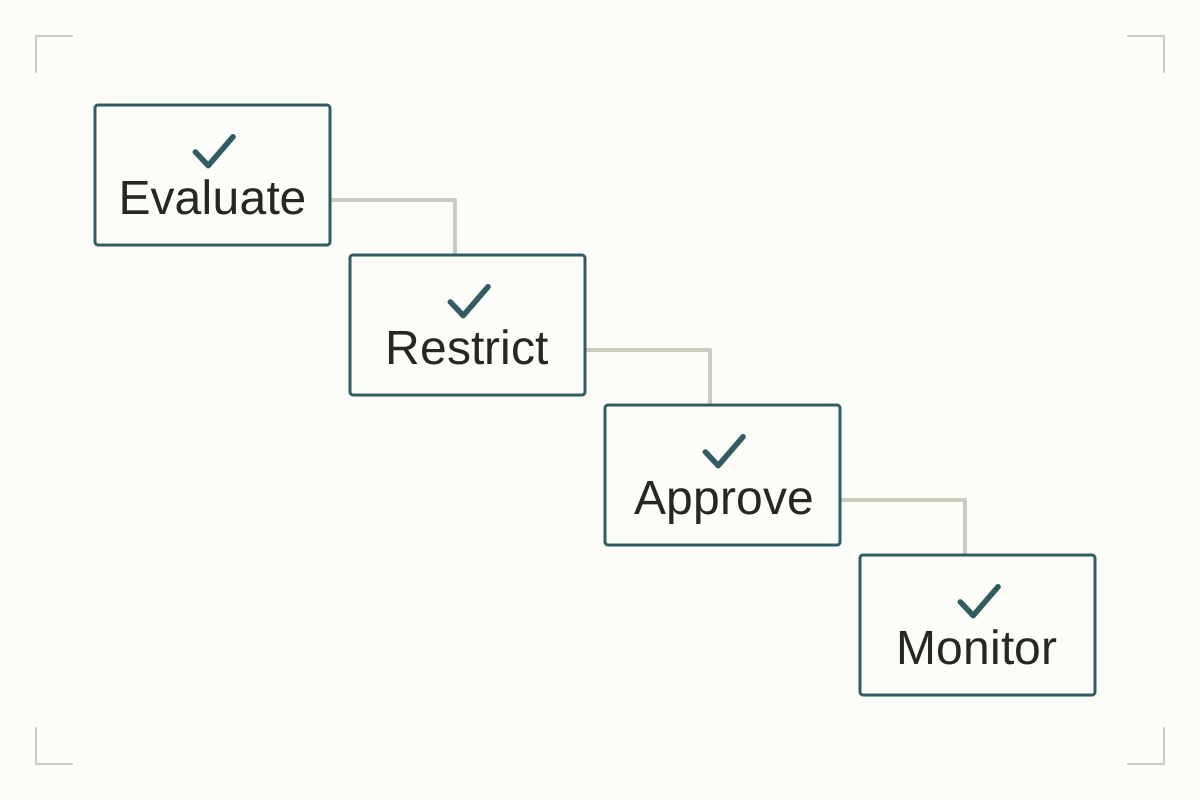
An AI agent is ready for a production trial when you can explain what it is allowed to do, show evidence about its behavior, and stop it without losing control of the underlying work. A successful demonstration covers one path through the task. A rollout needs decisions about incorrect answers, unavailable tools, repeated actions, changed permissions, and the people who will handle those situations.
Use this checklist to review a bounded workflow before expanding access. Adapt it to the task and the consequence of failure. A read-only internal assistant and an agent that modifies customer accounts need different acceptance criteria, even if they use the same model.
1. Define the workflow and its owner
Write the accepted inputs, permitted outputs, connected systems, and excluded actions. Name the business owner who decides whether the output is usable and the technical owner who maintains the integration. Specify the users and volume included in the first release. Record the fallback process so staff can continue the work when the agent is paused.
2. Evaluate representative cases
Use cases drawn from the actual workflow, including incomplete inputs, contradictory records, denied operations, and tool failures. Keep some examples separate from development and inspect results by failure category. Record the model identifier, prompts, tools, and application configuration used in each evaluation so a later change has a comparable baseline.
NIST's AI Risk Management Framework treats measurement and risk management as continuing activities across the system lifecycle. For a rollout, that means documenting the evidence you have and planning how to check behavior after the environment or system changes.Source: NIST AI RMF Core
3. Enforce permissions at the tool boundary
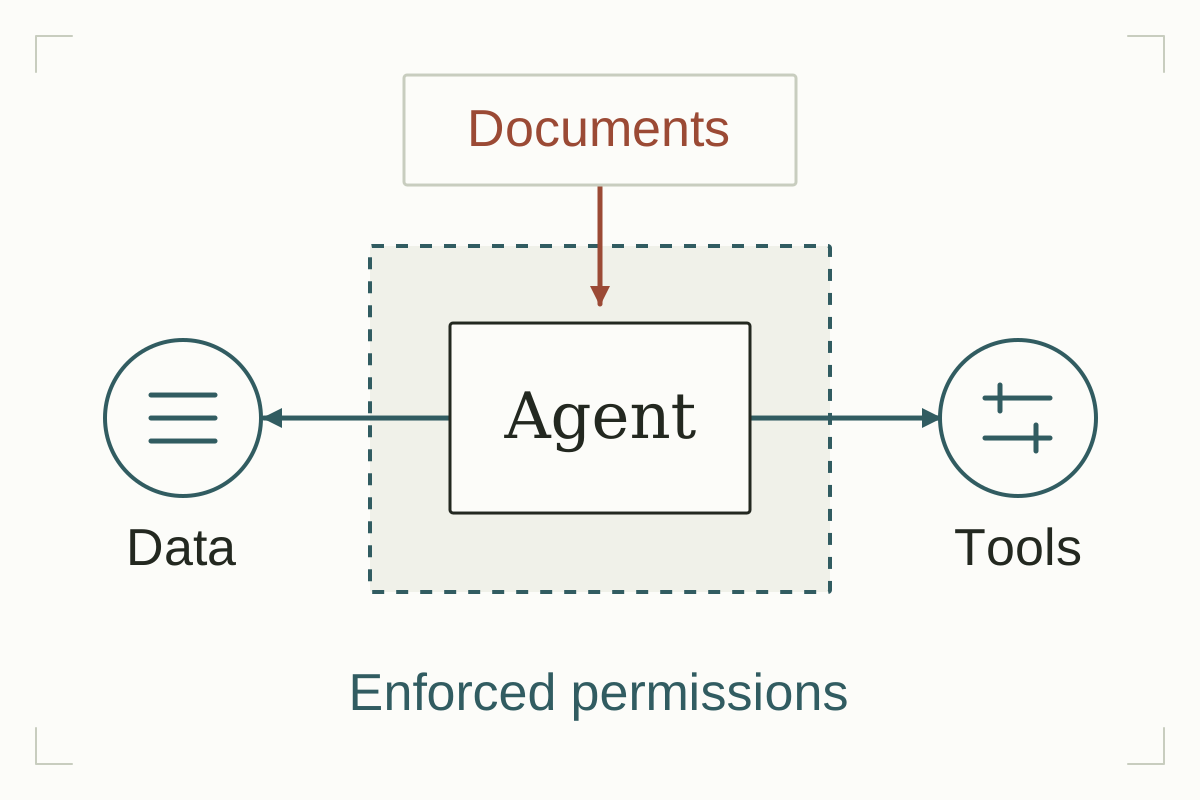
List every action the agent can request and the identity that executes it. Test a permitted operation and a denied one for each sensitive tool. Include tenant boundaries, revoked access, and records outside the user's scope. Decide what happens if the policy or identity service is unavailable; the tool should preserve the application's authorization requirements in that case.
OWASP's excessive-agency guidance recommends restricting tool capabilities and enforcing downstream authorization. Apply those restrictions in the connected system or tool implementation. A sentence in a prompt asking the agent to obey an access rule does not enforce the rule.Source: OWASP: excessive agency
4. Make review actionable
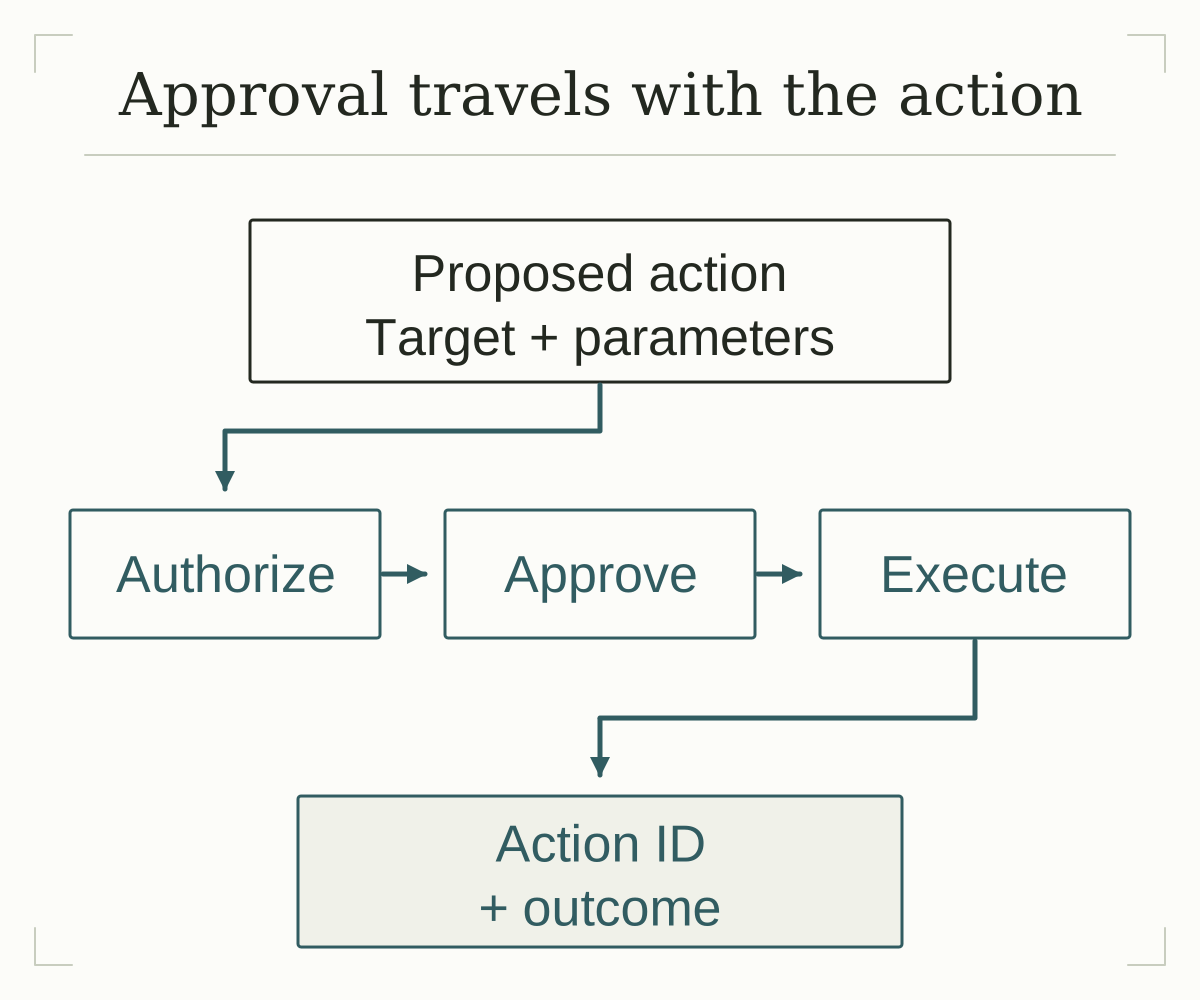
Where a person must approve an action, show the action's target, parameters, supporting evidence, and consequences. Bind approval to that action so the agent cannot substitute a different account or amount afterward. Define whether approval expires and what requires a new review. Give reviewers enough context to make a decision without rebuilding the entire investigation.
5. Exercise failures before rollout
| Scenario | Behavior to verify |
|---|---|
| Tool times out after a write | The workflow checks the resulting state before repeating an action. |
| Input is delivered twice | The system prevents unintended duplicate work or makes duplicates visible. |
| User loses access during a task | Later sensitive actions respect the required current permissions. |
| Model or retrieval service is unavailable | The task has a defined failure state and a usable recovery path. |
| Repeated unsuccessful attempts | Time, action, and spending limits stop an uncontrolled loop. |
Inspect the underlying system after each case. A tool response can be lost even though a change succeeded, and an agent's final message may not describe that state accurately. Operators need a way to identify partial work, decide what to resume, and avoid repeating a completed side effect.Source: Amazon Builders' Library: retries and unintended side effects
6. Give operators useful evidence
Record task identifiers, tool requests, policy decisions, approvals, and outcomes with appropriate access and retention controls. Avoid collecting secrets or full customer records merely because detailed logs are available. Define who investigates failures, which conditions trigger attention, and how the team disables a tool or pauses the workflow.
Track review demand and cost alongside quality. A change that keeps answer quality stable while doubling the number of retries can still make the workflow unsuitable for its budget or response deadline. Compare those measurements with the operating assumptions agreed before the trial.
7. Start with an observable release
Limit the first release to the users, tools, and task types you evaluated. Record who can expand that scope and what evidence they need. Re-evaluate relevant cases after changing the model, prompts, retrieval behavior, permissions, or tool definitions. Keep the prior configuration available where rollback is feasible.
The release record should name the version being deployed, the acceptance evidence, remaining limitations, operating owner, and stop procedure. Have the people who will operate the agent perform that stop procedure before they need it during an incident.
Sources
- NIST AI RMF Core airc.nist.gov
- OWASP: excessive agency genai.owasp.org
- Amazon Builders' Library: retries and unintended side effects aws.amazon.com
Bring the working prototype, its tools, and your rollout plan. We can evaluate the workflow and help build the controls and operating handoff it needs.
Explore ai consulting & integrationContinue reading
LLM penetration testing: what to test before launch
Scope an AI application assessment around data, identity, tools, and observable outcomes, with a practical test matrix for a support assistant.
Read the guide
AI integration costs: budget for your first production workflow
Estimate implementation, evaluation, human review, and operating costs with a worked budget whose assumptions you can replace.
Read the guide