
AI agents are hunting leaked secrets: what SaaS teams should fix first
A recent Microsoft report connects exposed repository credentials to cloud access. Review the identity behind each secret, its permissions, and your revocation process.
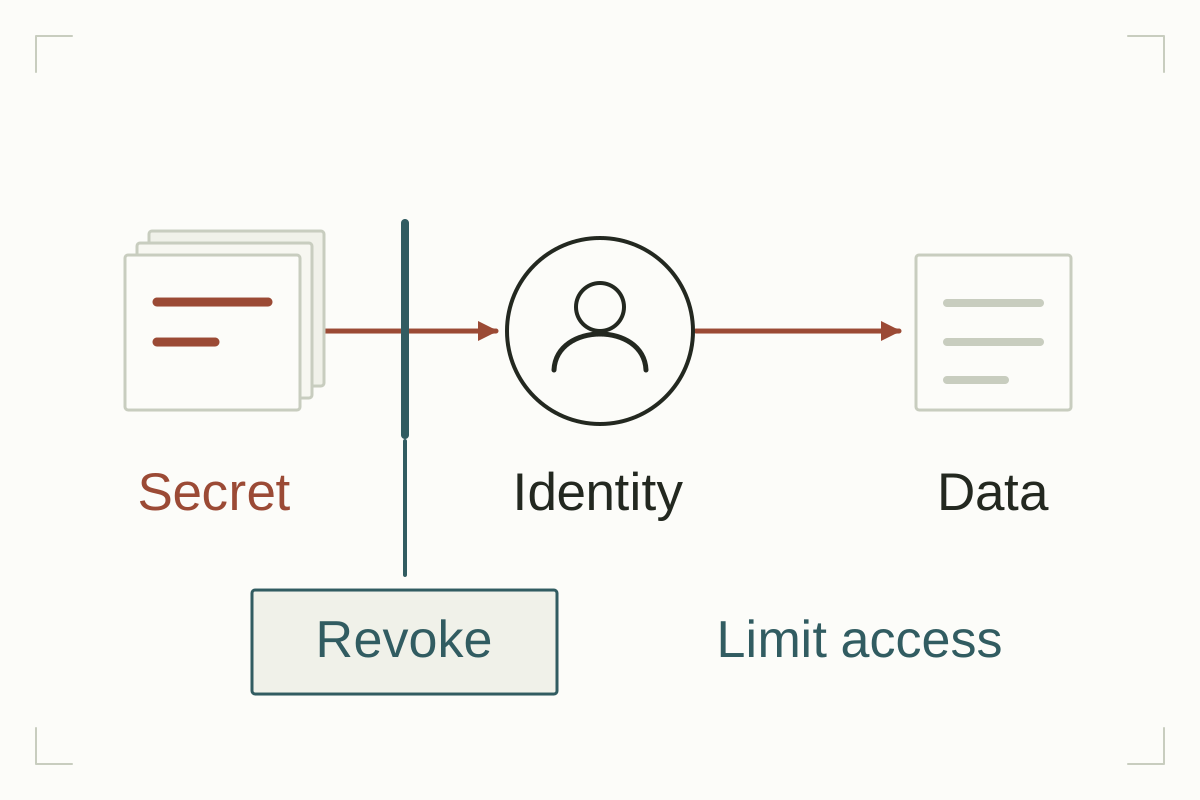
Start with the credentials that still work and the resources they can reach. A secret-scanning alert becomes an operational problem when a valid identity can read customer data, change a deployment, or mint more credentials. Your first review should connect the leaked value to those permissions and to an owner who can revoke it.
What Microsoft reported
On November 5, 2026, Microsoft reported that threat actors were using an agentic AI framework to find secrets in public GitHub repositories and conduct follow-on activity. Microsoft dated the initial observed searching to August 2026 and described application-credential abuse observed from October 28. Its account includes access to cloud resources and credential or data extraction. These are Microsoft's observations of particular campaigns, not a measure of how often AI agents successfully compromise SaaS companies.Source: Microsoft threat report · November 5, 2026
The useful question for an engineering team is how its own application would behave if somebody obtained one of its credentials. Build that assessment around the application's real access model. Whether a person, script, or model chooses the next request, the service receiving it still decides what the credential is allowed to do.
Connect each alert to an identity
Create an incident worksheet with one row per exposed credential. Record its issuer, owner, environment, first known exposure, revocation state, and the resources accessible through it. Store a fingerprint or provider identifier in the worksheet, never the secret itself. A development label is insufficient evidence of low impact: check which account and resources the credential actually names.
| Question | Evidence to collect |
|---|---|
| Which identity uses this credential? | Provider identity ID and owning team |
| What can the identity do? | Effective permissions and reachable resources |
| Which services depend on it? | Deployment configuration and known consumers |
| Is it now invalid? | Revocation record and a controlled verification |
| Was it used unexpectedly? | Authentication and resource-access logs within retention |
Suppose a hypothetical invoice-export worker has a token that can read a production database and write to an export bucket. The product team may describe it as an export credential. The investigation needs to establish which database records it can read, whether the bucket contains other tenants' exports, and whether the worker can grant access to another identity. That inventory determines the containment work.
Revoke access and account for dependent systems
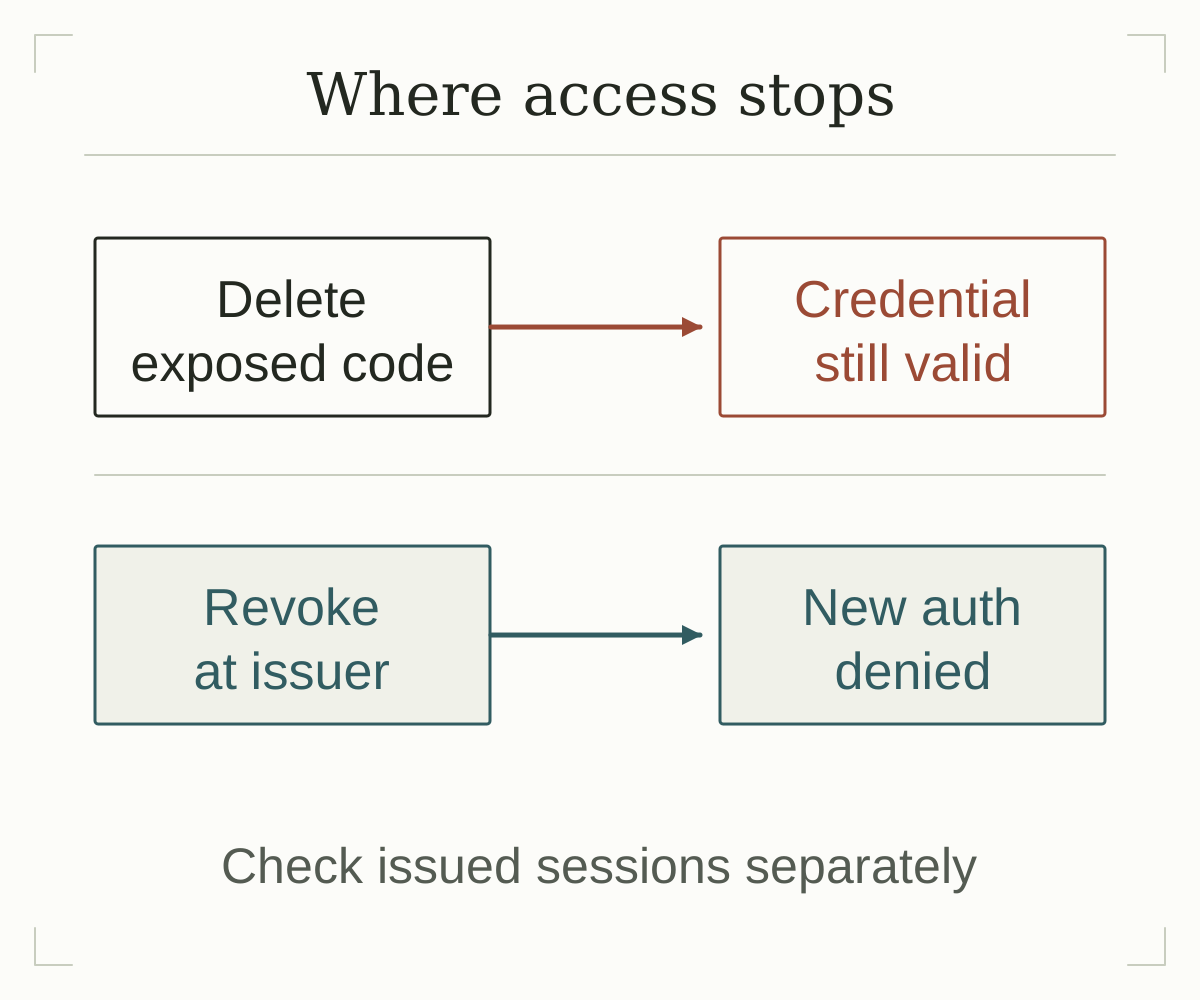
GitHub's remediation guidance treats leaked secrets as compromised and explains that deleting the code or repository does not invalidate the credential. Revocation or rotation must happen at the issuing service. Coordinate the change with the people operating its consumers and investigate unauthorized use.Source: GitHub: remediating a leaked secret
For the export worker, assign one person to the identity change and another to the application check. Record when the old credential stopped working, confirm that the replacement supports only the required export behavior, and check whether queued jobs or older deployments still depend on it. Follow the provider's rules for sessions and tokens that were already issued; their lifetime can differ from the credential used to obtain them.
Preserve enough evidence to explain what happened. Record which logs were available and the time range they cover. If retention starts after the exposure, an empty search cannot establish that the credential was never used. Document that gap alongside the actions completed.
Make the replacement narrower
Use the incident to challenge the permission model behind the leaked value. For our example worker, propose a dedicated export operation with bounded tenant access and an output location controlled by the service. Compare that design with handing the worker general database and storage credentials. The right implementation depends on the platform, but the review question is concrete: which operations does this job need, and who enforces that limit?
- Separate production and development identities, then verify their effective permissions rather than relying on names.
- Give each operational credential an owner and a replacement procedure that another engineer can execute.
- Review logs, build artifacts, example configuration, and support bundles as possible exposure paths.
- Exercise the revocation procedure in a test environment and record which consumers require attention.
Turn the incident into an engineering task
A useful remediation ticket names an identity, a permission change, a verification step, and an owner. For example: restrict the export worker to its approved data access path; confirm that normal exports succeed; confirm that another tenant's records remain inaccessible; attach the results. That is a reviewable change your team can maintain after the alert is closed.
Sources
- Microsoft threat report · November 5, 2026 microsoft.com
- GitHub: remediating a leaked secret docs.github.com
Bring your repository and application-identity inventory. We can review how secrets enter your code, what they can access, and how to close the exposed paths.
Explore application securityContinue reading
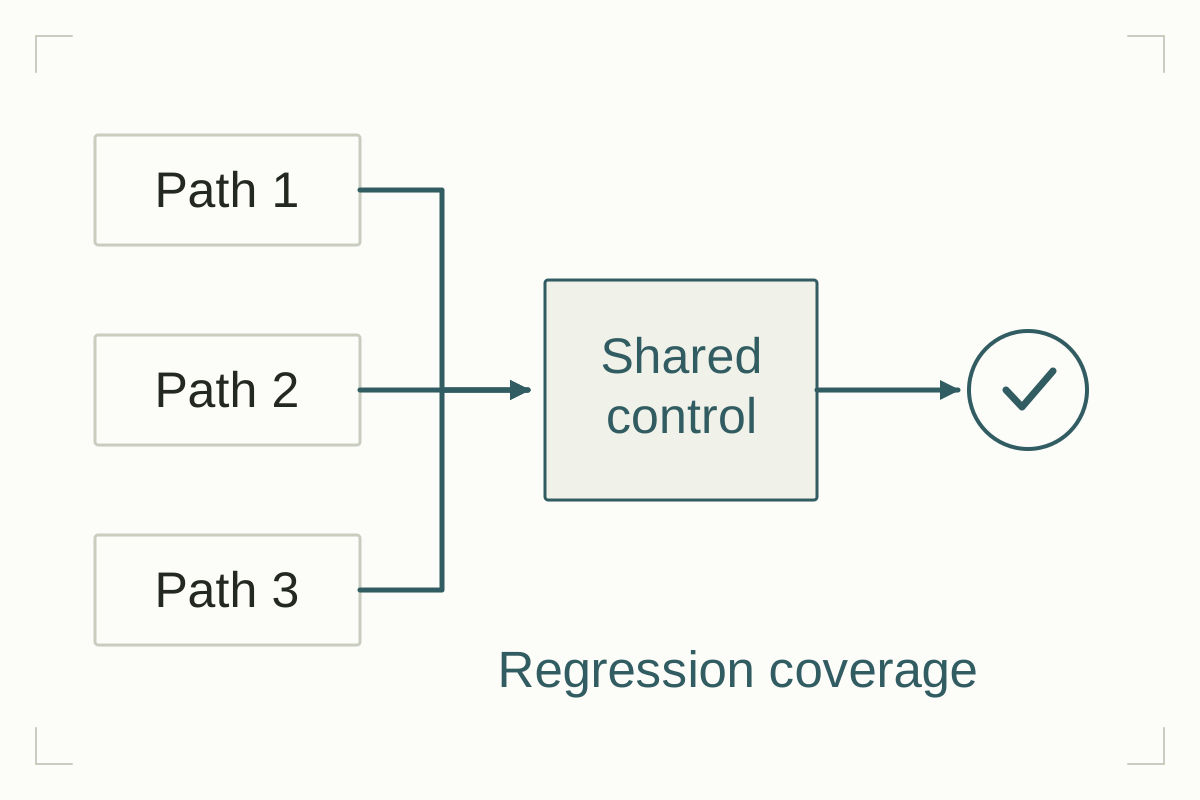
How to reduce recurring vulnerabilities in a SaaS codebase
Use repeated findings to identify shared design problems. Move from isolated patches to maintained controls, regression coverage, and a measure of recurrence.
Read the guide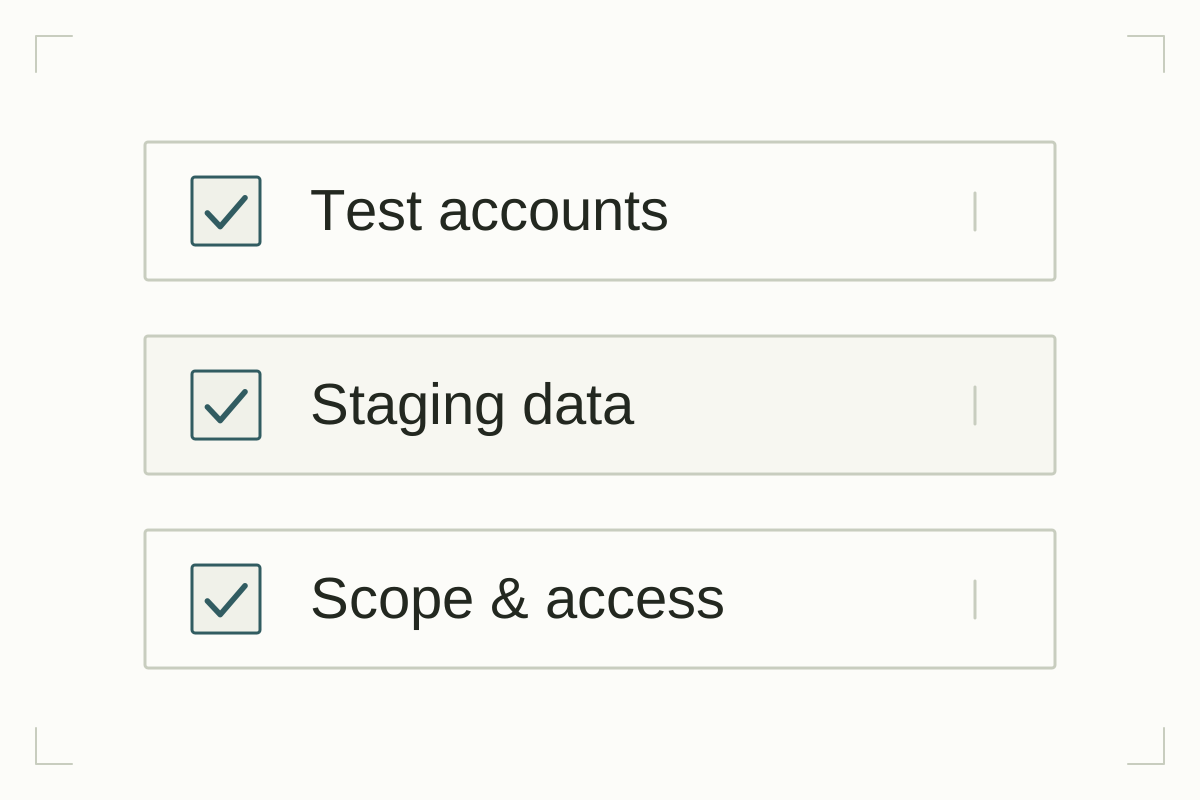
SaaS penetration testing checklist: prepare your application
The accounts, permissions, test data, and operating arrangements that let a penetration test reach the workflows you need assessed.
Read the guide