
SaaS penetration testing checklist: prepare your application
The accounts, permissions, test data, and operating arrangements that let a penetration test reach the workflows you need assessed.
Prepare a SaaS penetration test by giving the tester a usable application, representative identities, and clear operating boundaries. An account that cannot reach billing, an empty tenant, or an undocumented administrator workflow can leave the product's most sensitive behavior outside meaningful coverage. Check access before the scheduled testing window begins.
Assign one engineering contact who can resolve access problems and answer questions about intended behavior. A tester can observe that two roles receive different results; someone on your team must explain whether that difference is required. Keep that contact available during testing and designate a backup for urgent findings.
Write the scope as a product map
List the domains, applications, APIs, services, and environments covered by the engagement. Mark the flows that move sensitive data or grant authority: invitations, SSO setup, support access, exports, webhooks, refunds, and account recovery. Include an architecture sketch with data stores and external providers. The sketch should explain who can call what and under which identity.
OWASP's testing guide covers authentication, authorization, configuration, and other application concerns. Use a named version as a reference when agreeing coverage, then add the business-specific workflows your product requires. A generic checklist will not describe who is allowed to transfer ownership of a customer workspace.Source: OWASP Web Security Testing Guide
Prepare accounts that expose permission differences
| Identity | Purpose |
|---|---|
| Tenant A owner | Administration, invitations, billing, and organization settings. |
| Tenant A member | Ordinary product use and restrictions within the same tenant. |
| Tenant A restricted user | Read-only or limited-resource permissions. |
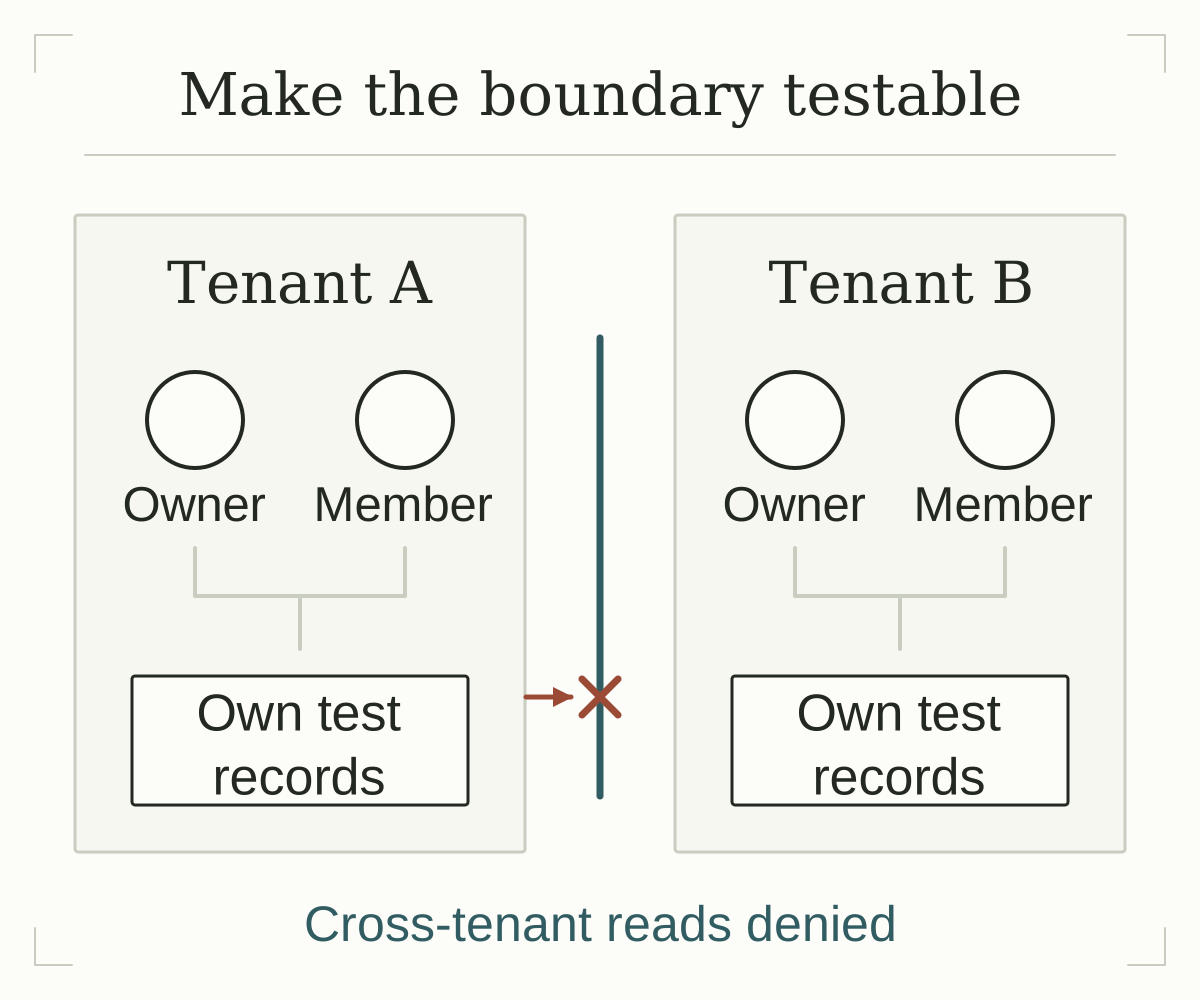
| Tenant B owner and member | Cross-tenant separation using comparable objects and workflows. |
| Support or operator identity | Separately agreed administrative and impersonation flows. |
Adapt this matrix to your product. Supply separate identities where the test needs simultaneous sessions, and confirm how MFA, SSO, email verification, and account recovery will work. Deliver credentials through the agreed secure channel. Avoid placing them in the scope document or a broadly shared ticket. Define who will disable the accounts after testing.
Make test data behave like real data
Populate each tenant with synthetic records that exercise realistic ownership, sharing, and lifecycle states. For example, create an unpublished document, a shared document, an expired invitation, and an export that a restricted member should not download. Give the tester a short description of the expected permissions. Empty lists make it difficult to tell whether access controls are functioning.
Document where staging differs from production: authentication configuration, storage policies, network controls, background processing, and third-party integrations. If a payment or email integration uses a stub, state what the stub omits. Testing the stub cannot establish the security of the live integration. Decide whether the omitted behavior needs a separate test or another source of evidence.
Agree how testing will operate
- Record the authorized assets, testing period, source addresses when relevant, and excluded activities.
- Agree on limits for load, bulk actions, destructive changes, and interactions with third-party services.
- Set an emergency contact and a clear process for pausing or resuming testing.
- Decide whether monitoring teams should expect the activity and whether defensive detection is itself being assessed.
- Define the evidence retention, encryption, reporting, and deletion arrangements.
A test may reveal paths that lead outside the agreed environment. The response should be to discuss scope with the named contact before proceeding. Your team's authorization over its own application does not automatically extend to a shared provider or another customer's tenant. Resolve ownership questions during preparation where possible.Source: NIST SP 800-115: assessment scope and third-party consent, section 6.5
Run a short readiness check
- Log in as each supplied role from a fresh browser session.
- Perform the main workflow and create the objects needed to test it.
- Check API documentation, request examples, and source access if included.
- Verify that the testing contact can restore access or reset synthetic data.
- Confirm the report format, urgent notification channel, and retest arrangements.
Agree how product changes during the engagement will be recorded. A new deployment can invalidate a finding, create a new path, or make a previously tested workflow unavailable. Share the release identifier at the start and notify the tester when it changes. Keep the report connected to the version and environment that produced the evidence.
Finally, reserve engineering time to review findings while the context is fresh. Assign an owner to each accepted issue, record the intended fix, and preserve the steps needed for retesting. Preparation is complete when the tester can reach the agreed workflows and your team knows how it will act on the results.
Sources
- OWASP Web Security Testing Guide wstg.owasp.org
- NIST SP 800-115: assessment scope and third-party consent, section 6.5 nvlpubs.nist.gov
Share your application architecture and release deadline. We can help define the test scope, required access, and remediation handoff.
Explore penetration testingContinue reading
How much does a SaaS penetration test cost?
Build a useful budget from scope, tester time, reporting, and retesting. Includes a worked example and a checklist for comparing quotes.
Read the guide
Secure code review vs. penetration testing: which do you need?
Choose an assessment based on the question you need answered, the access you can provide, and the evidence your team needs to act.
Read the guide